
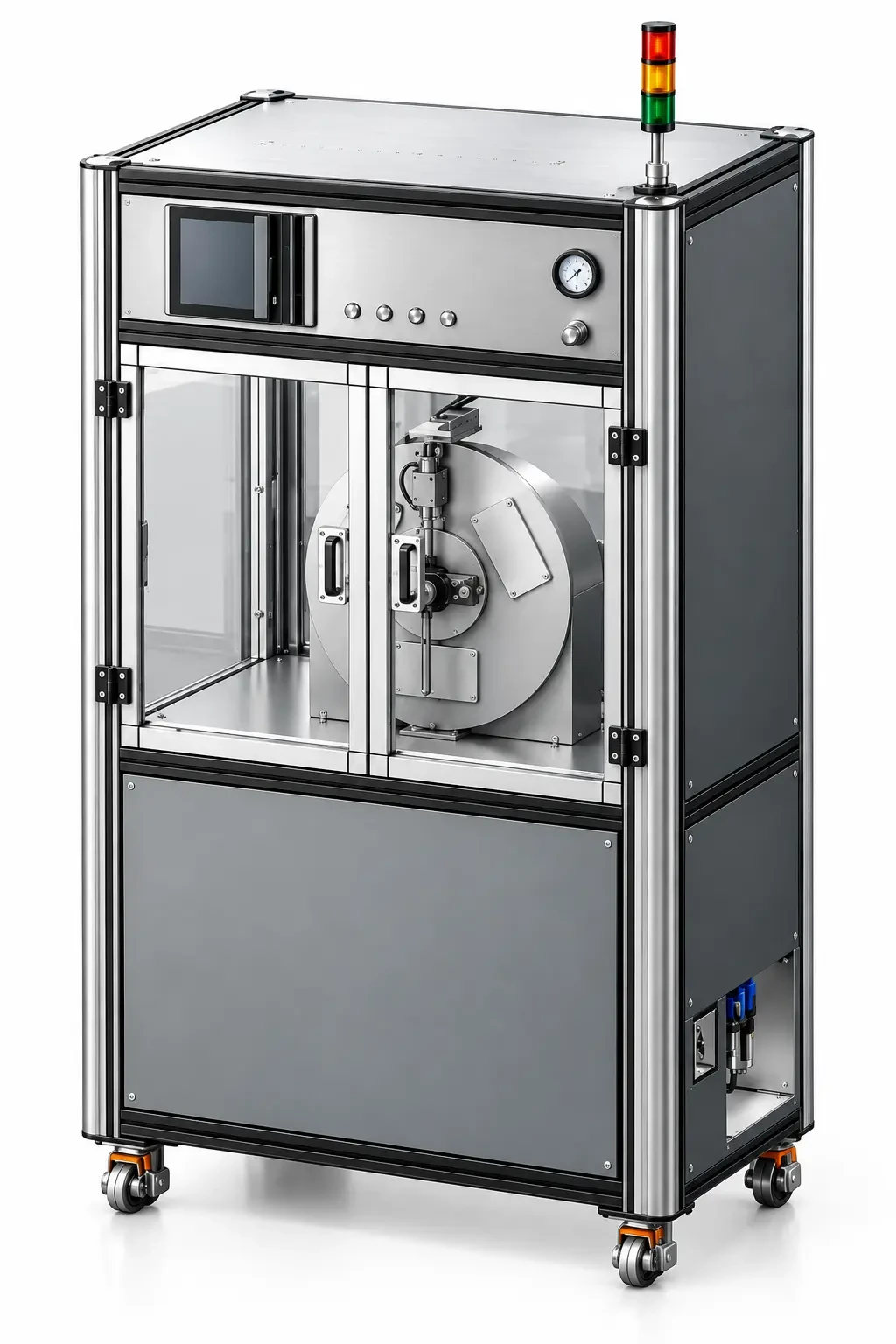
Why are welds more critical in liquid cooling scenarios?
Data center liquid cooling systems and computing equipment corrugated hoses are subjected to continuous vibration, thermal cycling, and medium pressure. Any through-wall defects in the welds can lead to leaks and compromise system reliability. Therefore, beyond the welding process itself, weld inspection is a mandatory step before product release.
Common Tests
- Airtightness and Helium Testing: Perform gas pressure hold or helium mass spectrometry leak detection on welds. Offers higher sensitivity than conventional pressure testing, ideal for products requiring tight leak control.
- Pressure Test: Hold under specified pressure and check for leaks or permanent deformation to verify the load-bearing capacity of welds and pipe body.
- Appearance and Dimension Verification: Inspect weld bead formation, surface oxidation level, and critical dimensions to support process stability assessment.
Recommended Inspection Process
Execute in the following sequence: visual inspection → dimension verification → airtight or helium leak test → pressure resistance test. Perform consistency sampling on batch products: record test data across multiple consecutive batches of the same specification to detect process drift. If an anomaly is detected, first review welding parameters and incoming material status before deciding on rework or line stoppage for adjustment. For customized inspection plans by specific specification, contact us for process consultation and sample validation.